
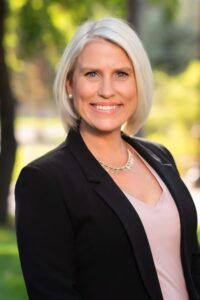
Crystal Favati
Q&A with Master of Science in Business Analytics Student
I stumbled upon business analytics when I returned to school as a non-traditional student in my mid-30s. I knew I wanted to work in a business environment but the path I had originally chosen in human resources was not the right one for me.
While studying at Eastern Maine Community College, I learned that I really liked math and was good at it, so after graduation, we moved to Colorado and I started looking for an undergraduate program that fit my interests. I also wanted to learn at an institution with a stellar academic reputation and small, intimate class sizes. When I visited DU, I felt as though I was home. I searched the different degrees and noticed that they had a business analytics program, and figured how perfect that was for me since it combines both business and math concepts.
I earned my bachelor of science in business administration from DU, majoring in business information and analytics, right before the COVID-19 pandemic hit. I was having a hard time finding a job and decided that I would fast track my goal of getting a master’s degree, so I enrolled in the Master of Science in Business Analytics program at Daniels. It felt right and I knew there was so much more I wanted to learn, especially since I had taken a graduate class in my undergrad and was amazed by the presentations from the graduate students. I knew that a master’s degree was what I needed.
Why business analytics?
I enjoy looking at the data. It seems like a puzzle that tells a story as you dig deeper. And I like that numbers don’t lie, and you can use them to make data-driven business decisions.
There is nothing better than knowing that I could help a company make better business decisions with the various analytical models that we have learned in the program. But you can never leave out data quality and governance. I’m a true believer that the cleaner the data, the better the model.
I also take pride in enhancing my presentation skills by knowing who my audience is. Just because I know what the model is doing and saying does not mean that the executives do. It’s nice to know that I can explain that to them and show them the recommendation that the data is presenting.
 Why DU?
From the first day I stepped foot on campus, I knew this is where I wanted to finish out my schooling. I have learned that I do love coding and DU considers what you need to be successful in your career. The professors do take an honest interest in their students and their futures.
During my time at DU, I have learned how to code in Python, R, SQL and Hadoop. The professors take the time to walk through each code so you know what it is doing, and if you don’t understand or get tripped up, they take the time to help. I have gotten the chance to use different statistical software and learn some that you would have never expected, like Excel. But the one thing that DU does instill in each of the students is knowing how to write solid business reports and put them into a presentation to present your findings and know your audience.
Tell us about the capstone:
This was another reason why I had chosen to continue my education at DU after my undergrad. I had done some research and saw that DU does a live capstone, meaning you get live data from a company and you do consulting work. I was able to work with a company that was of interest to me. Even though I couldn’t totally cut my teeth on the analytical modeling, I was able to learn a huge lesson in data quality and governance and the power of visualization. That taught me a valuable lesson that large databases are not the prettiest and definitely not like the datasets that we see in class or snag off the internet for class use. The scary and exhilarating part of it all is that it is an individual project, but don’t worry, I was assigned an advisor to assist me.
What’s next?
My long-term goal is to transfer into an analytical role with the FDIC, but that will have to wait since I will be starting with them as an FIS examiner right when I graduate. I feel that this degree will help me through my training to see the bigger picture and know how to dig deeper. I have always been an analytical thinker who normally asks too many questions, but hey, who can blame me?
My dream is to be able to become an industry analyst collecting bank data and building statistics. I’m a numbers girl who believes that numbers don’t lie, and it’s fascinating to see what the data says and how it’s changed over time.
Things to do in and around Denver?
I love the outdoors and what better place to be than a place where the sun shines more than 300 days a year. I enjoy packing up family for either a day hike in the mountains or a weekend trip to camp in one of the many different campgrounds in the national forest or state parks. We also spend a great deal of time skiing. This year we learned that we love whitewater rafting and have planned to make it a yearly tradition. When the mountains call but we decide not to go, we find places around Denver to explore. We love playing tourist in places like Idaho Springs, Red Rocks, Garden of the Gods and the Cheyenne Mountain Zoo. I have been able to do what we love with my family because the flexibility of the program and understanding of the expectations of the various projects and homework.
 What were you looking for in a business school?
I wanted a school that understood what it took to set students up for success and professors who had real-world experience. I remember asking Phil Beaver, professor of the practice in business analytics, about the Master of Science in Business Analytics program and how much it was like the undergrad program. He told me that they strive to build upon what we have already learned and make us critically think. That sold me because I wanted to make sure I was going to be challenged because I enjoy learning. I also wanted a place where I would network with business professionals and have coaching for landing the job.
Favorite faculty member?
It’s really hard to stay, because I have had so many great professors, but if I had to choose, I would have to say Phil Beaver and Kellie Keeling. When you first meet Phil Beaver, he can be intimidating, but he truly cares about the students and their success. You just have to get past the Austin Powers references. Kellie Keeling is a fellow Texan and she also cares about the students and their success. They are both some of the smartest and most fascinating people I have ever meet. They both have different experiences and interests, and it has been a pleasure to get to know them.
What advice would you give to a prospective student?
First off, don’t take yourself so seriously. However, push yourself out of your comfort zone. No one grows if they stay in the box. Get involved and network when you get here, there are plenty of student organizations to get involved with. It makes it easier to land the dream job. And finally, brush up on your statistics, Phil Beaver hits the ground running. Also, get to know your fellow classmates. Study groups are the best and they might just help you when you need them the most.
How have you evolved as a leader during your time at Daniels?
Being involved in classes and learning the skills to give me confidence when talking and presenting on the different analytical models or about business in general. I also got involved in the Denver Business Analytics Club and the Daniels Graduate Women in Business student group as an executive board member. Being a part of these clubs gave me opportunity to publicly speak and facilitate meetings.
What would you tell your past self?
Enjoy the ride, it goes fast. Even though you never thought you would accomplish your dream of getting a college degree, don’t worry, you’ll have your master’s! You’ll learn coding languages and programs you never thought you would. You’ll see a whole new side of Excel. You’ll help fellow classmates and they will help you too, just ask. It might take you a while to get there and you’ll learn some life lessons along the way, but you’ll get there. Also, don’t be too hard on yourself, you do have son who will watch you walk through this and will make plans for his future, and remember you had a hand in it.
